
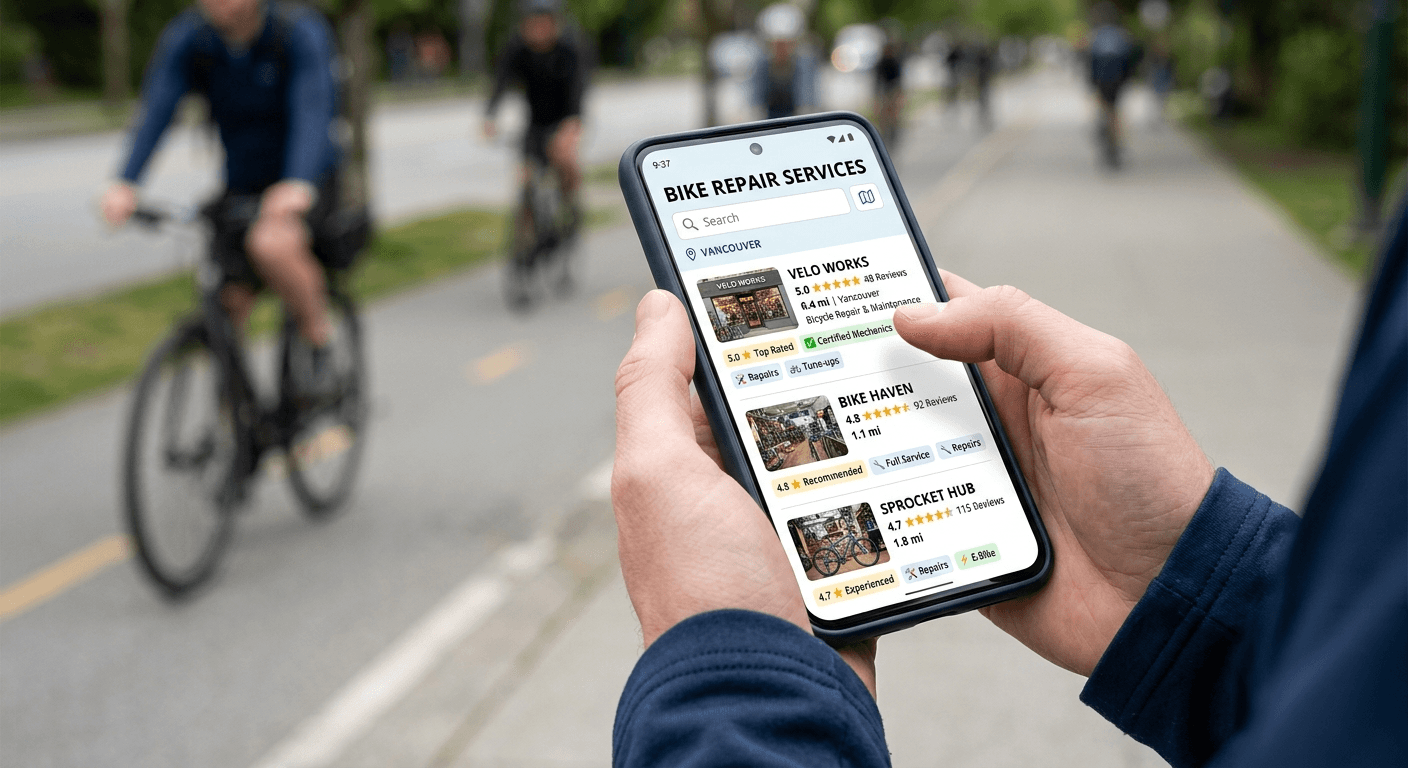
How to Find the Right Mobile Bike Mechanic
TL;DR: Finding the right mobile bike mechanic comes down to five steps: search in the right places (specialized directories beat general search), verify credentials and certifications, read reviews for patterns rather than just star ratings, ask the right questions before booking, and understand typical pricing so you can spot outliers. This guide walks through each step so you can make a confident, informed choice.
Choosing a mobile bike mechanic is not quite the same as picking any other service provider. Your bike is a precision machine with dozens of interdependent systems. The person working on it needs the right skills, the right tools, and the right approach to diagnostics. A poor choice can mean recurring issues, unnecessary part replacements, or worse, a safety problem you don't discover until you're mid-ride.
For many riders, the challenge isn't a lack of options. It's knowing how to evaluate those options. How do you tell the difference between a mechanic who truly understands drivetrains and one who's figuring it out as they go? How do you know whether the quoted price is fair? What should a professional profile actually tell you?
This guide is built around those questions. It's a framework for evaluating and choosing a mobile bike mechanic, whether you're booking your first service or switching from a provider who hasn't met your expectations. Every section is designed to help you make a better decision, faster.
Where to Search for Mobile Bike Mechanics
The quality of your search determines the quality of your options. Not all channels surface the same results, and the differences matter more than you might expect.
Specialized Directories
From a practical perspective, a purpose-built directory is the most efficient starting point. FindBikeDocs is designed specifically for this: it lists mobile bike mechanics across North America and lets you search by location, service type, and availability. Profiles include service areas, specialties, and contact information, all organized in a way that makes comparison straightforward.
The advantage of a specialized directory is signal-to-noise ratio. Every listing is a mobile bike mechanic. You're not sorting through auto repair shops, general handymen, or results that happen to mention "bike" somewhere on the page.
Google Maps and General Search
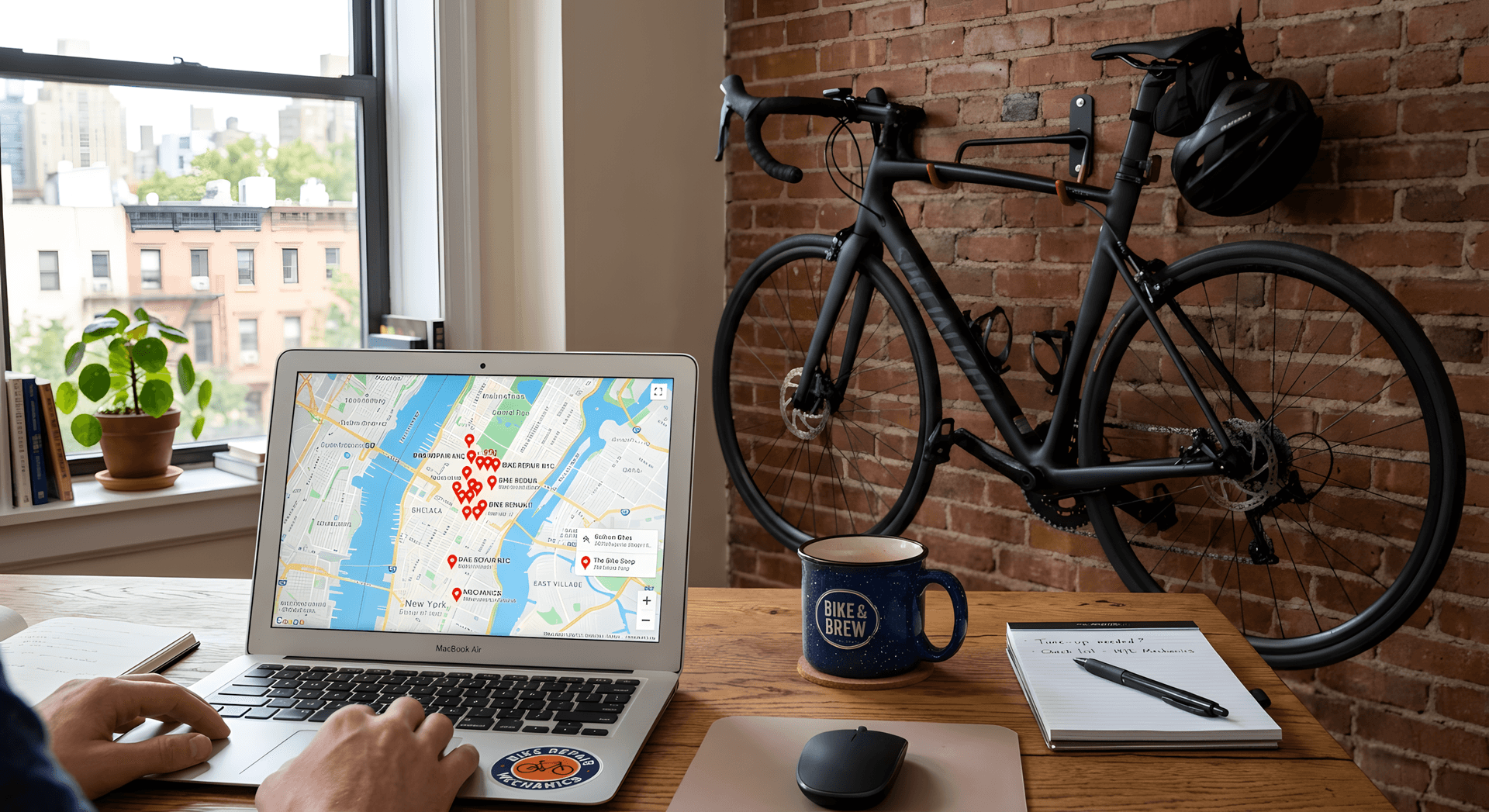
Google Maps is a reasonable second step, but it has limitations for this use case. Mobile mechanics don't always have a fixed storefront, which means they may not appear in map results at all. When they do, their listings often lack the detail you need to evaluate them properly. You'll find a phone number, maybe a few reviews, and not much else.
A general web search works similarly. You'll find some mechanics, but you'll also find a lot of noise: outdated listings, aggregator pages, and results for traditional shops that happen to offer mobile service as a side note.
Social Media and Community Groups
Local cycling groups on Facebook, Reddit, and Nextdoor can be valuable sources of recommendations. The upside is that you get firsthand opinions from riders in your area. The downside is that these recommendations are scattered, anecdotal, and hard to compare. Someone might rave about a mechanic based on a single positive interaction without much context.
Social media is best used as a supplement: a way to validate a mechanic you've already found through a directory or to surface options that don't have a strong online presence.
Word of Mouth
Riders you trust are one of the strongest signal sources. If someone in your group ride or cycling club has used a mobile mechanic repeatedly and keeps going back, that tells you something no online profile can. The limitation, of course, is that your network only extends so far. Word of mouth works best in combination with broader search methods.
Why Specialized Directories Are Worth Starting With
In many cases, riders default to Google because it's familiar. But a general search engine isn't optimized for this kind of discovery. A directory like FindBikeDocs is built to answer the exact question you're asking: who is available near me, what do they offer, and how do I reach them? Starting there saves time and produces better results.
What Certifications Should You Look For?
Certifications are one of the most reliable ways to assess a mechanic's baseline competence. They don't guarantee a great experience on their own, but they do confirm that someone has been trained and tested on the skills that matter.
UBI Certification
The United Bicycle Institute (UBI) is the most widely recognized training program for bicycle mechanics in North America. UBI offers courses that range from basic repair to professional-level certification, covering frame and fork assessment, wheel building, drivetrain systems, hydraulic brakes, and more.
A mechanic with UBI certification has completed structured coursework and hands-on evaluation. It signals a commitment to the craft beyond self-taught experience. This is especially meaningful for complex repairs where precision matters, such as headset installation, bottom bracket service, or wheel truing.
Brand-Specific Certifications
If you ride a bike with components from Shimano, SRAM, Campagnolo, or an e-bike system from Bosch, Shimano STEPS, or Brose, brand-specific certifications are worth looking for. These programs train mechanics on the proprietary tools, diagnostic software, and service procedures for specific component ecosystems.
For e-bike owners in particular, this matters. Bosch-certified mechanics, for example, have access to the Bosch diagnostic tool and the training to use it. A non-certified mechanic might be able to handle basic e-bike maintenance, but they may lack the tools and knowledge to troubleshoot motor or battery issues effectively.
Years of Experience
Certifications tell you what someone has learned. Experience tells you what they've seen. A mechanic with ten years of hands-on work has encountered a wider range of problems, edge cases, and bike types than someone with two years and a certificate.
From a practical perspective, the ideal combination is both: formal training plus significant field experience. When reviewing a mechanic's profile, look for how long they've been operating, how many types of bikes they service (road, mountain, gravel, e-bike, cargo), and whether they mention ongoing education or training.
What If a Mechanic Has No Certifications?
Lack of certification doesn't automatically disqualify a mechanic. Some of the best mechanics in the industry are self-taught or apprentice-trained. But without certifications, you'll need to rely more heavily on other signals: reviews, references, and the quality of your pre-booking conversation. If a mechanic has no certifications and no reviews, that's a higher-risk choice.
How to Evaluate Reviews and Profiles
Reviews are the most accessible form of social proof for a mobile mechanic, but they require more than a glance at the star rating to be useful.
Look Beyond the Average
A 4.8-star rating from 50 reviews tells a different story than a 5.0 from three reviews. Volume matters. A mechanic with a large number of reviews and a consistently high rating has demonstrated reliability across a meaningful sample. A perfect score from a handful of reviews could reflect a great mechanic or simply a small, unrepresentative sample.
Read for Patterns
Individual reviews are anecdotal. Patterns across reviews are diagnostic. Look for recurring themes:
- Communication: Do multiple reviewers mention clear communication, timely updates, and responsive scheduling? That's a strong signal.
- Thoroughness: Do riders describe the mechanic explaining what they found, what they did, and what to watch for in the future? That level of detail suggests a mechanic who takes their work seriously.
- Punctuality and reliability: Consistent mentions of on-time arrivals and met deadlines indicate professional operations.
- Negative patterns: If multiple reviews mention the same issue (slow response times, surprise charges, incomplete repairs), take that seriously even if the overall rating is high.
Evaluate the Profile Itself
A well-constructed profile tells you more than reviews alone. Look for:
- Service list: Does the mechanic clearly state what services they offer? A detailed list (tune-ups, brake bleeds, wheel builds, e-bike diagnostics) is more useful than vague language like "all bike repairs."
- Service area: Does the mechanic define where they operate? Clear boundaries indicate an organized operation.
- Photos and equipment: Some mechanics include photos of their mobile setup. A well-equipped van or trailer suggests investment in their business.
- Response time: On platforms that track it, faster response times generally correlate with better service experiences.
Compare Multiple Profiles
Don't evaluate a single mechanic in isolation. Compare two or three profiles side by side. This makes differences in professionalism, service range, and pricing much more apparent. A mechanic who looks good in isolation may look average when compared to a stronger alternative.
Questions to Ask Before Booking
A short conversation before booking can save you significant time and money. These questions help you assess professionalism, transparency, and fit.
Do You Carry Liability Insurance?
This is a baseline question. A professional mobile mechanic should carry general liability insurance that covers damage to your bike during service. Some also carry commercial auto insurance for their mobile setup. If a mechanic hesitates or doesn't carry insurance, that's worth weighing carefully.
How Do You Source Parts?
Parts sourcing affects both cost and quality. Ask whether the mechanic uses OEM (original equipment manufacturer) parts, aftermarket alternatives, or a mix. Some mechanics have relationships with distributors and can source parts at competitive prices. Others may mark up parts significantly.
In many cases, a good mechanic will give you options: OEM for riders who want exact replacements, and quality aftermarket for those who want to save money without sacrificing performance. The key is transparency. You should know what's going on your bike and why.
What Does Your Quoting Process Look Like?
A professional mechanic should be able to provide a clear estimate before starting work. Ask how they handle situations where additional issues are discovered during service. The best practice is for the mechanic to pause, contact you with the findings, and get approval before proceeding with any work beyond the original scope.
Avoid mechanics who can't or won't provide an estimate. "It depends" is a valid answer to some questions, but it shouldn't be the answer to all of them.
What Is Your Service Area?
Mobile mechanics define their service areas differently. Some cover a specific radius from a home base. Others serve entire metro areas or even multiple cities. Confirming that you're within their service area avoids wasted time for both parties.
It's also worth asking whether there's a travel fee for your location. Mechanics on the edge of a service area may charge an additional trip fee, and it's better to know upfront.
What Is Your Typical Turnaround?
For mobile service, "turnaround" means two things: how quickly they can schedule your appointment, and how long the service itself takes. Both matter. A mechanic who is booked three weeks out may be popular for good reason, but if you need service soon, that timeline doesn't work.
Ask about their current availability and how they handle urgent or time-sensitive requests. Some mechanics reserve slots for same-day or next-day service at a premium.
Do You Guarantee Your Work?
A confident mechanic stands behind their work. Ask whether they offer any kind of warranty or guarantee on labor and parts. Common terms are 30 to 90 days on labor, with parts covered by the manufacturer's warranty. Mechanics who offer guarantees are signaling confidence in their workmanship.
Red Flags to Watch For
Not every mechanic is a good fit, and some are best avoided entirely. Here are the warning signs that should give you pause.
No Clear Pricing
A mechanic who can't provide even a rough price range for common services is either inexperienced or deliberately opaque. You don't need an exact quote for every scenario, but a professional should be able to tell you their hourly rate and approximate costs for standard jobs like tune-ups, brake adjustments, or tire replacements.
No Online Reviews or References
Everyone starts somewhere, and a new mechanic won't have a deep review history. But if a mechanic has been operating for more than a year and has zero reviews anywhere, that's unusual. It could mean they don't prioritize customer relationships, or it could indicate a pattern of one-time customers who didn't return.
If reviews are sparse, ask for references directly. A mechanic who won't provide references from past clients is a significant red flag.
Pressure to Book Immediately
A professional mechanic is confident enough in their service to let you take time to decide. If someone pushes hard for an immediate commitment, uses artificial urgency ("I only have one slot left this month"), or discourages you from getting a second opinion, proceed with caution. Legitimate demand doesn't require high-pressure tactics.
Won't Answer Questions Directly
Pay attention to how a mechanic handles your pre-booking questions. Evasive answers, irritation at reasonable questions, or an unwillingness to explain their process are all signals. A good mechanic welcomes questions because they're an opportunity to demonstrate expertise and build trust.
No Written Estimates
Verbal quotes are hard to verify after the fact. A mechanic who refuses to put an estimate in writing (even a simple text or email) is creating conditions for a billing dispute. Written estimates protect both parties and are standard practice among professionals.
Vague or Missing Service Descriptions
If a mechanic's profile or website describes their services only in the most general terms ("I fix bikes"), without any detail about what they specialize in, what types of bikes they work on, or what equipment they use, that's a signal of limited capability or limited professionalism. The best mechanics are specific about what they do and don't do.
What to Expect Cost-Wise
Understanding typical pricing helps you evaluate quotes, spot outliers, and budget appropriately. Here are the ranges you're likely to encounter for mobile bike mechanic services in North America.
Labor Rates
Most mobile mechanics charge between $60 and $120 per hour for labor. Rates vary by region (urban areas tend to be higher), experience level, and specialization. E-bike specialists and mechanics with advanced certifications often fall at the higher end of this range.
Common Service Pricing
Here's what you can expect for the most frequently requested services:
| Service | Typical Price Range |
|---|---|
| Basic tune-up | $75 - $150 |
| Comprehensive tune-up | $150 - $250 |
| Flat tire repair | $20 - $40 |
| Brake adjustment | $25 - $50 |
| Brake bleed (hydraulic) | $40 - $80 |
| Drivetrain cleaning and adjustment | $50 - $100 |
| Full overhaul | $200 - $500 |
| Wheel truing | $25 - $50 |
| Cable and housing replacement | $40 - $80 |
| E-bike diagnostic | $50 - $100 |
Prices vary depending on bike type, component quality, and regional market rates. These ranges represent what you'll encounter across most North American markets.
The Mobile Premium
Mobile mechanics typically charge a convenience or travel fee of $20 to $50 per visit on top of their standard service rates. This covers fuel, travel time, and the overhead of maintaining a mobile workshop.
From a practical perspective, this premium is often offset by the value of your time. Transporting a bike to a shop, waiting for service, and picking it up again can easily consume two to three hours. If your time has value (and it does), the mobile premium is often a net savings.
Parts Pricing
Parts are usually billed separately from labor. Some mechanics mark up parts by 10 to 30 percent over wholesale cost, which is standard industry practice. Others charge retail pricing and make their margin on labor. Ask how parts are priced before authorizing any work that requires components.
For riders who prefer to source their own parts, some mechanics are willing to install customer-supplied components, sometimes at a slightly higher labor rate. This is worth discussing if you have preferences about specific brands or want to shop for deals.
When a Quote Seems Too Low
A quote that's significantly below market rates isn't always a bargain. It can indicate a mechanic who is cutting corners, using low-quality parts, or lacking the experience to accurately estimate the scope of work. If a quote comes in well below the ranges above, ask questions before committing. Understand what's included, what parts will be used, and what's excluded.
How to Book Through FindBikeDocs
FindBikeDocs is built to make the search and evaluation process as straightforward as possible. Here's how to use it.
Step 1: Search by Location
Start at the FindBikeDocs search page and enter your city or zip code. The directory will show you mobile bike mechanics who serve your area, sorted by relevance.
Step 2: Review Profiles
Each mechanic has a profile that includes their service area, specialties, certifications, and contact information. Use the evaluation criteria from this guide to compare your options. Look at service lists, experience indicators, and any reviews or ratings.
Step 3: Narrow Your Options
Filter results based on what matters most to you. If you ride an e-bike, look for mechanics with e-bike experience or Bosch/Shimano STEPS certification. If you need a specific service like a wheel build or suspension service, check that it's listed in their profile.
Step 4: Make Contact
Reach out to one or two mechanics that fit your criteria. Use the questions from this guide to have a productive pre-booking conversation. Ask about availability, pricing, insurance, and parts sourcing.
Step 5: Book and Confirm
Once you've chosen a mechanic, confirm the appointment details in writing. Make sure you have a clear understanding of the service scope, estimated cost, location, and timing. A brief confirmation message protects both you and the mechanic.
Browse by Region
You can also browse mobile bike mechanics by location to explore what's available in your area before starting a targeted search. This is useful if you're new to an area or want to see the full landscape of options near you.
A Framework for Your Decision
Choosing a mobile bike mechanic doesn't need to be complicated, but it does benefit from a structured approach. Here's a simple framework:
- Search smart. Start with a specialized directory to get relevant results quickly.
- Verify credentials. Look for certifications, experience, and professional presentation.
- Read strategically. Scan reviews for patterns, not just ratings.
- Ask questions. A short pre-booking conversation reveals more than any profile can.
- Compare pricing. Know the market rates so you can evaluate quotes in context.
- Trust your judgment. If something feels off during the evaluation process, move on.
For many riders, the right mechanic becomes a long-term relationship. Someone who knows your bike, understands your riding style, and can spot developing issues before they become problems. Taking the time to choose well upfront pays dividends on every ride that follows.
Ready to find a mobile bike mechanic? Search your area on FindBikeDocs and start comparing your options today.